Role
Lead UX Designer
Timeline
In Progress
Client
National Geographic Society
Step in UX Process
Discovery Phase, Research
▎B A C K G R O U N D ▎
Designing a Personalized Experience for Grantees, Explorers, and Funding Staff
National Geographic invests in grantees and Explorers who are committed to a lifelong pursuit of exploration and sustainability. They seek out talented individuals who want to build a long lasting relationship with National Geographic, and will
The Problem
A time consuming application process for grantees and Explorers that was preventing National Geographic from discovering new talent, and an outdated grant management system.
The Solution
A personalized grant experience that uses conditional logic to streamline the application process and direct grantees to personalized questions designed to give them to best chance of receiving funding.
▎T H E P R O C E S S ▎
Navigating the Discovery Phase
To begin understanding issues with our current grant application process, I decided to reach out to National Geographic’s funding team. I wanted to dive deeper into their goals around funding, and some of the frustrations they had with our most recent funding year.
Collecting Assumptions & Defining Initial Goals
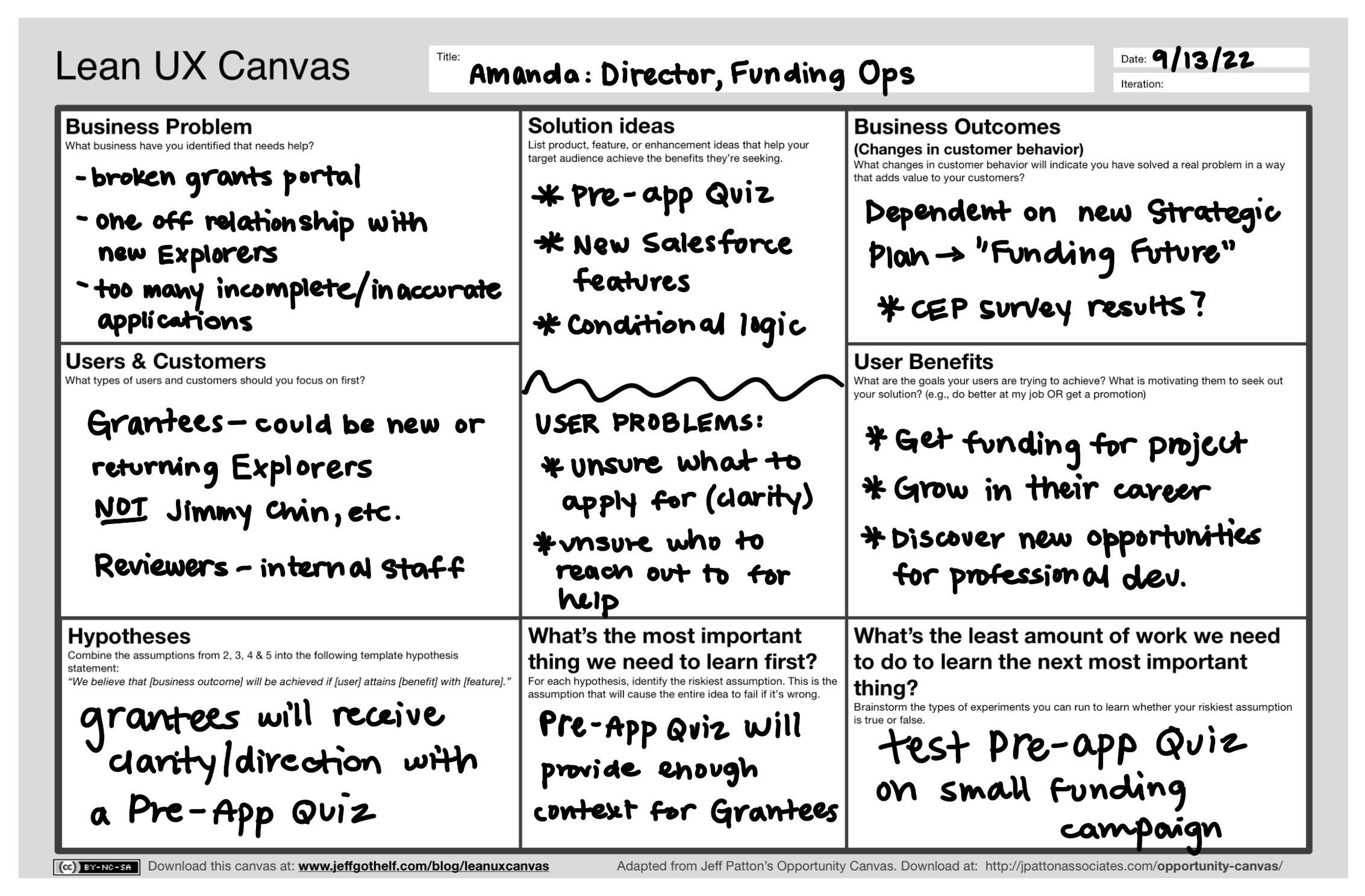
I decided to use the Lean UX Canvas as my starting point. The Lean UX Canvas is a facilitation tool for cross-functional teams designed to start a conversation about the work the team is doing. It exposes the gaps in a team’s understanding of the problem they’re solving, who they’re solving it for and why they believe their solutions will work.
User
Business
Goal 1: Reducing Uncertainty & Providing Clarity
User
Business
KPIs
-
Pre-Application Experience
Explore personalization / conditional logic
Answering Application Questions + Submission
Review & Organize existing user data
Audit current questions across all categories (Conservation, Education, Research, Storytelling)
Post-Application Experience
Build journey map to identify gaps and opportunities to streamline experience
Reduce stress and uncertainty in grant application process
Improve grantee/Explorer satisfaction
Indicators from CEP Grantee Perception Survey Report
User
Business
Provide support to grantees and Explorers
Reduce need and volume of support requests
Goal 3: Sharing Opportunities for Growth
Increase access to professional development opportunities
Build relationship with new and returning grantees/Explorers
Goal 2: Providing Support
▎R E S E A R C H ▎
Reviewing Previous Research
The design industry is constantly evolving, and having an organized system in place to deliver rapid design is key to having consistently great UX. A design system allows a team to build better products, faster. Designers can focus on what’s important – the user – without getting lost in the details of building components.
Affinity Diagramming
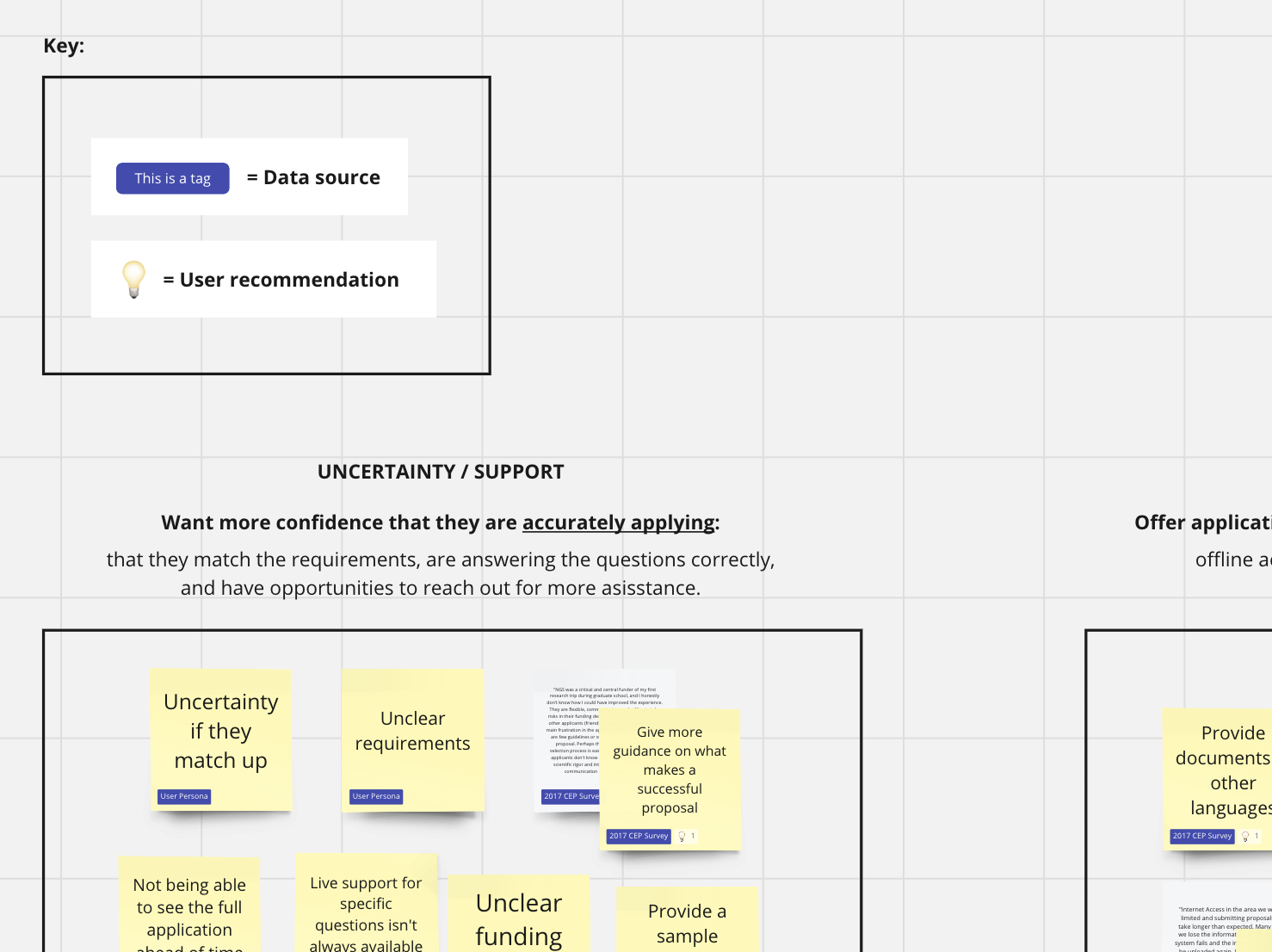
I wanted to evaluate the current state of our grant experience, so I started by reviewing current research and organizing it into overarching categories that aligned with our initial business and user goals.
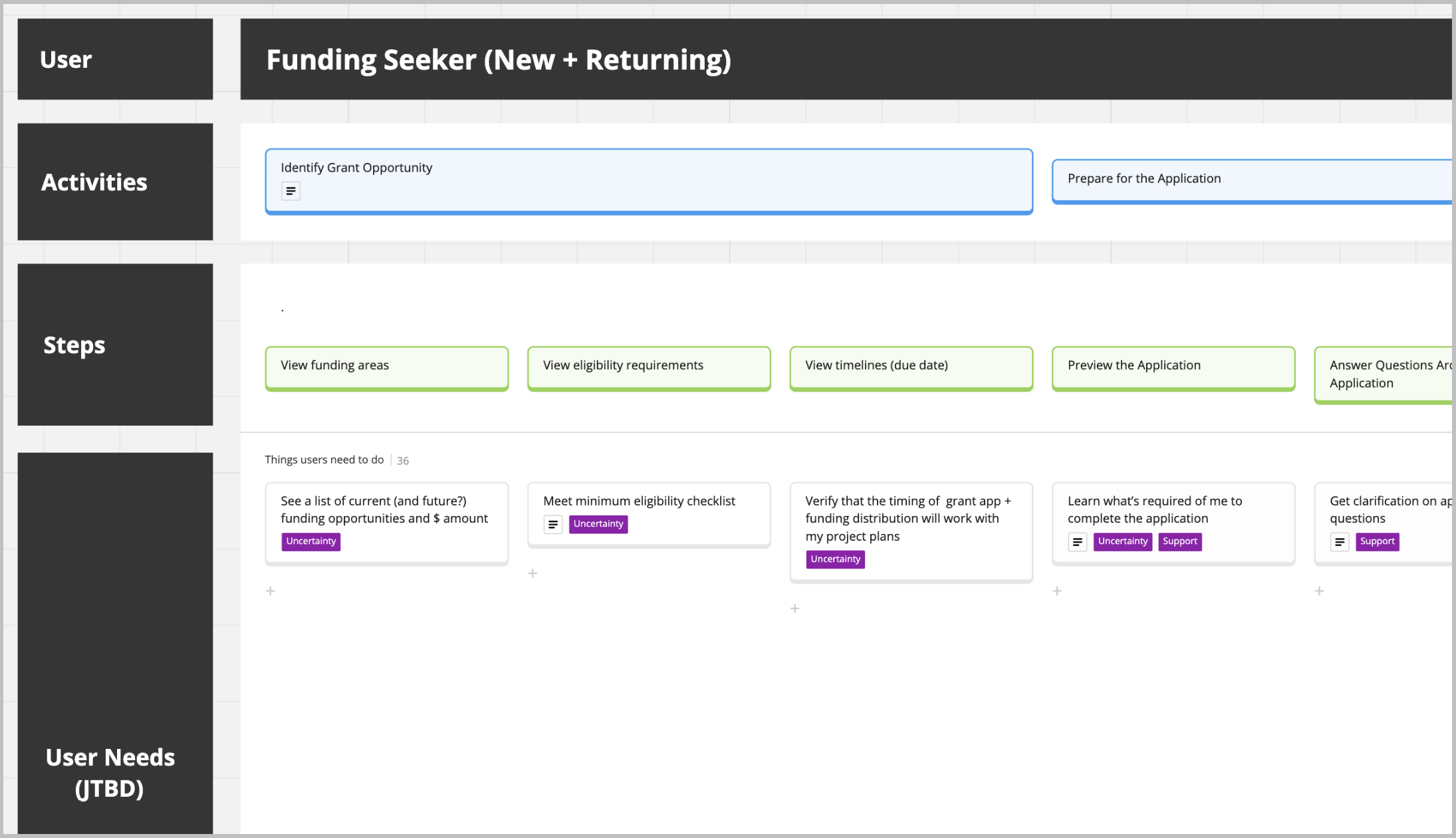
Building a Story Map of Known Jobs to Be Done
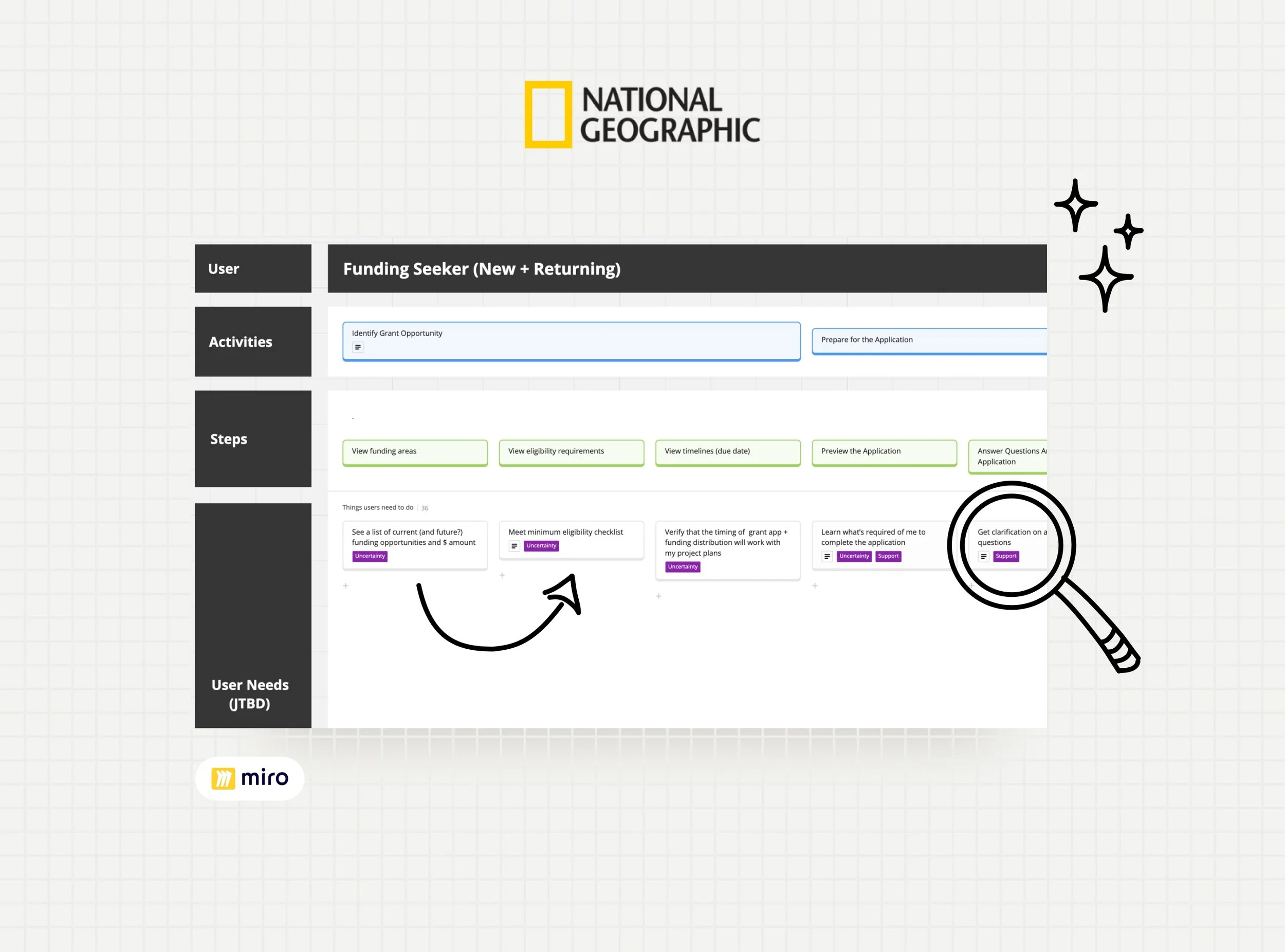
I created a story map to organize previous research, identify jobs to be done (JTBD), align JTBD to initial business and user goals, and gauge competitors in the market. My hope was to determine if it would be more efficient to build a new grant experience, or if there were platforms already available that would solve our goals.
Exploring Personalization / Conditional Logic
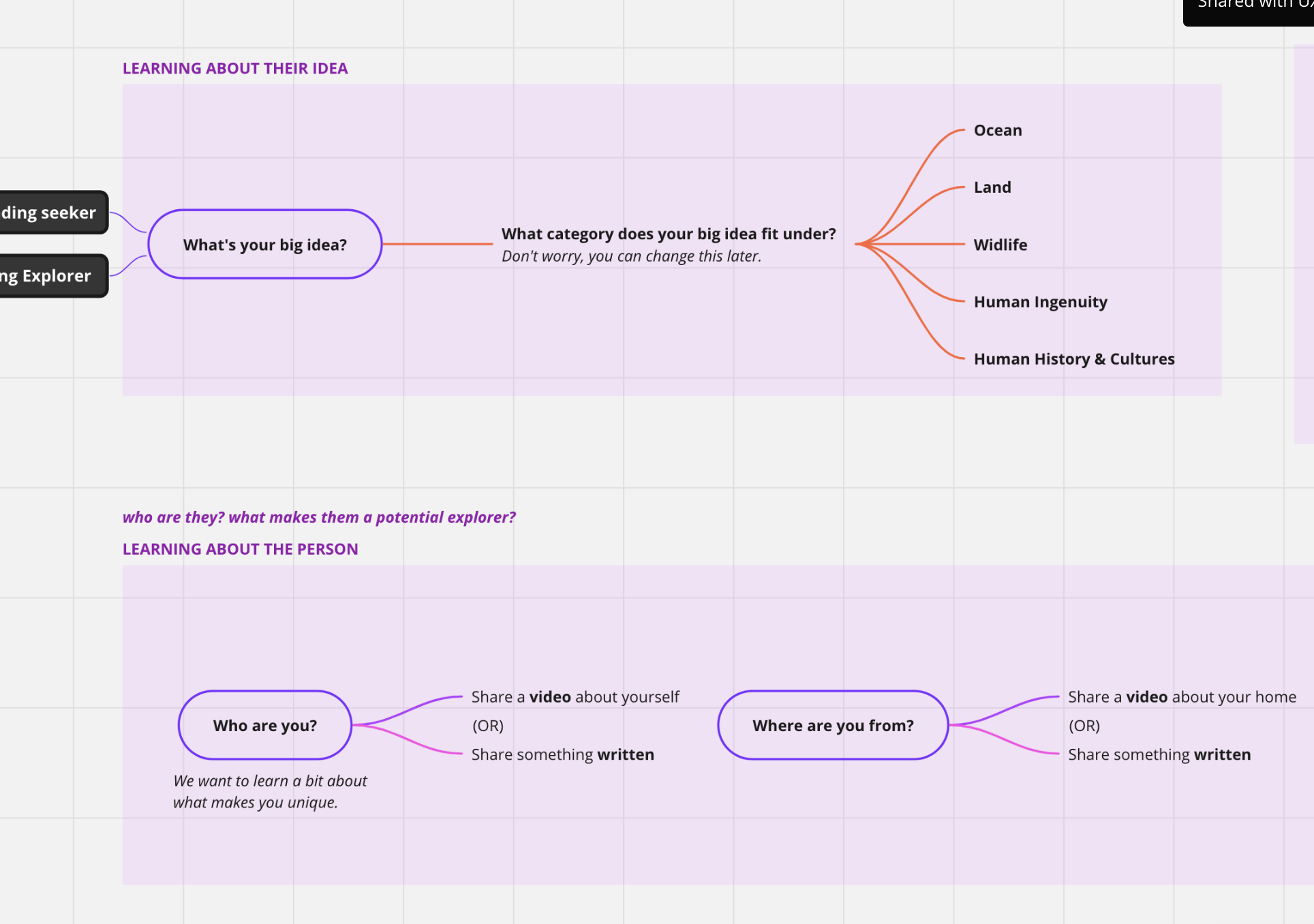
Many grant management systems offer conditional logic questioning, and I hoped to take advantage of that functionality and identify areas it could helps solve defined goals.
In the below example, I started to explore ways grantees could be guided through our pre-application process without the initial uncertainty and stress they described facing in the old application process.